How does a home solar system work?


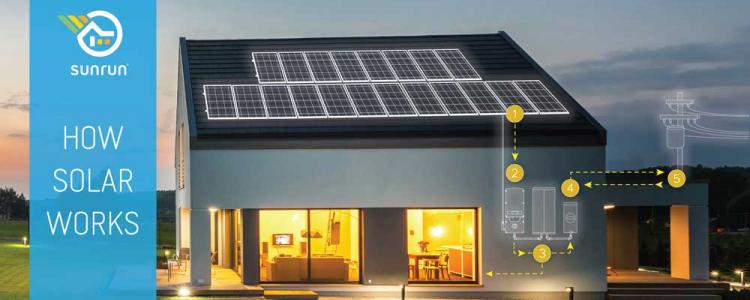
1. Solar Panels
Solar panels are made of photovoltaic cells that convert sunlight to direct current electricity (DC electricity). As long as the sun ray’s are making contact with your roof, your panels are converting solar radiation into DC electricity. And if it’s cloudy out? Don’t worry, your panels will be working hard rain or shine. But your electricity isn’t ready just yet—you’ll need an inverter to get the kind of power you need to turn the lights on.
See if you qualify for the
26% federal tax credit
Thanks so much! We'll call you shortly.
Sorry, we are not taking new customers in your area yet
Refer a friend. Get $1000
2. Inverter
The inverter is a device that takes the DC electricity produced by your solar panels and turns it into alternating current electricity (AC electricity). It’s typically installed on an exterior wall of your house, or in the garage.
3. Main Electric Service Panel
Solar electricity from your inverter flows to the electrical panel, and then into to your home where it powers your lights and appliances. If your panels generate more solar energy than you use, the excess power will flow into the utility grid. Even better? You might even earn extra energy credits from your local utility.
4. Sunrun Meter
Your Sunrun net meter monitors your system production and sends the information to us through a wireless signal. Since it tracks your energy production 24/7, it’ll automatically alert Sunrun if it detects problems or irregularities. That way, we can make sure your solar system is in the very best shape without you ever having to lift a finger.
5. Utility
When your system produces more than you need, the excess energy is sold back to your utility and credited to your monthly electric bill. When you need more energy than your solar system can produce, your home will automatically pull the energy from your utility.
Easy, right? That’s how we like solar too. When you choose Sunrun, going solar is no sweat, including figuring out how it works. And if you’ve still got questions? No problem. Contact our solar consultants today and see just how easy going solar can be.

Sunrun
Recommended Articles
-

What to Know Before Going Solar with Sunrun
No question about it, going solar will change your life, or at least the way you think about...
-
Advantages of solar pv (photovoltaic) energy
Solar PV energy is clean energy One main reason to opt for solar energy is...
-

5 Facts About Solar Energy You Probably Didn’t Know
Harnessing clean energy from the sun is the hottest topic of the decade. As we speak, this...
-
3 Ways A Home Battery Helps You Stay In Control During Time Of Use Rates
Breaking Down Time of Use and Battery Storage Maybe you’ve heard of time-of-use (TOU)...